
Torch-on and flat roof waterproofing
Flat roofs leak where water sits. We fix the falls, repair the screed and seal it with a torch-on membrane or a seamless liquid system, whichever suits the roof.
Flat roofs fail differently from pitched roofs. Water doesn’t run off quickly, so any low spot, crack or open seam gets tested for hours or days after every storm. On Cape Town flat roofs we usually find three problems working together: ponding water, a cracked screed underneath, and a membrane whose seams or upstands have opened.
Torch-on membranes
Torch-on waterproofing is a bitumen membrane in rolls, heat-bonded to a primed concrete surface. Each roll overlaps the last and the laps are torched closed, giving a thick, tough layer that handles standing water well. It is a proven choice for open flat concrete roofs, flat garages and large simple areas.
What makes torch-on last is the detail work: well-bonded laps, upstands taken properly up walls and parapets, sealed outlets, and a protective coating against UV.
Liquid systems for complicated roofs
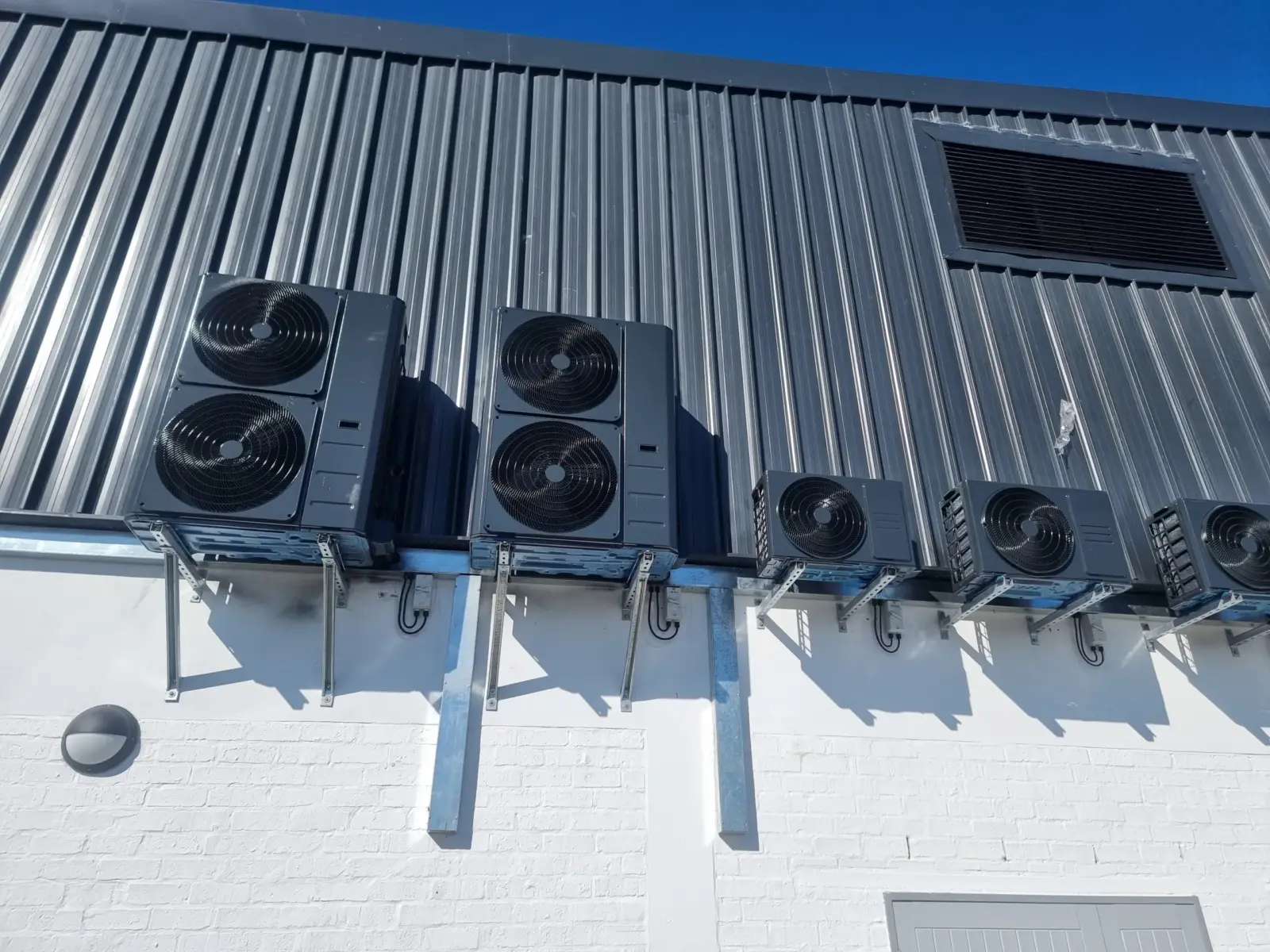
Some flat roofs are full of details: air-conditioner plinths, pipes, solar mounts, skylights and drains. Every one of those is a joint that sheet membranes have to be cut around. Liquid rubber and polyurethane systems are brushed or rolled on, often with a reinforcing fabric, and cure into one seamless skin that wraps every detail without joins.
Fixing ponding water
A membrane laid over a roof that holds water will fail sooner. Where a roof has low spots, we discuss correcting the falls with a screed so water reaches the outlets, and enlarging or adding outlets where they are undersized.
Our flat roof process
- Inspect the roof, test the existing membrane and find where water is getting in
- Remove failed membrane and loose material where needed
- Repair cracks and screed, correct falls and prepare outlets
- Prime and apply the torch-on or liquid system, detailing upstands and penetrations
- Apply the protective finish and walk the roof with you
Related services
Questions
Can you torch-on over old torch-on?
Sometimes. If the existing membrane is well bonded and the problem is local, it can be repaired or overlaid. If it is blistered, delaminated or trapping water, it must come off first. We check by cutting test areas during the assessment.
Does torch-on need to be painted?
Many torch-on membranes are protected with a reflective or aluminium coating, which shields the bitumen from UV and keeps the roof cooler. Some membranes come with a mineral finish instead. We specify the finish with the membrane.
Is liquid waterproofing better than torch-on?
Neither is better everywhere. Torch-on is excellent on open, simple flat roofs. Liquid systems win where there are many pipes, upstands and corners, because they cure into one seamless skin.
Get a free assessment
Gavin or the team visits, finds the cause and sends an itemised quote.
Or call Gavin on 082 821 3275
Prefer to talk it through?